
Gibil

The box. Forged in seconds. Gone when done.

Your own machine, on demand. Root, Docker, SSH, your repo — forged in seconds, kept alive as long as you need, gone when you say.

or
Read the Docs →

A real machine

Same commands as your laptop, on a fresh Ubuntu server. apt install works, services stay running, docker compose just works, and you get your own IP. Hetzner for cheap EU/US, Vultr for APAC — your choice.

Plug into anything

Drive it from your terminal, your AI agent, VS Code, or Sandcastle. Any workflow that needs a clean Linux box, plug it in.

Yours for as long as you need

Set a TTL from 15m to 30d, or extend it later. Ephemeral by default, persistent by choice.
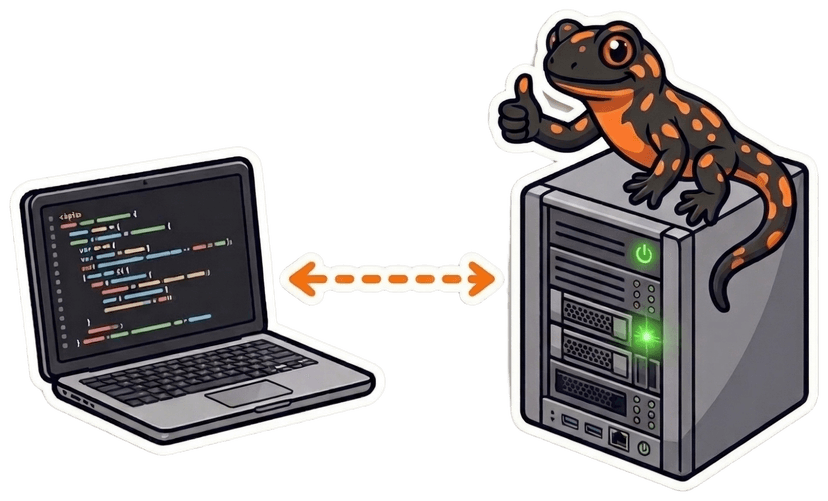
Salamander sitting on a server, giving thumbs up, connected to a laptop

Your agent works remotely. You stay local.

Builds, tests, Docker, dependencies. All the heavy compute moves to a Gibil machine. Your laptop stays quiet. You keep your IDE, your chat, your full context. The agent runs the tests, pushes the branch, opens the PR. You review.
terminal
$ vm_bash("pnpm test")
✓ 53 tests passing
$ vm_bash("git push && gh pr create")
✓ PR #42 opened
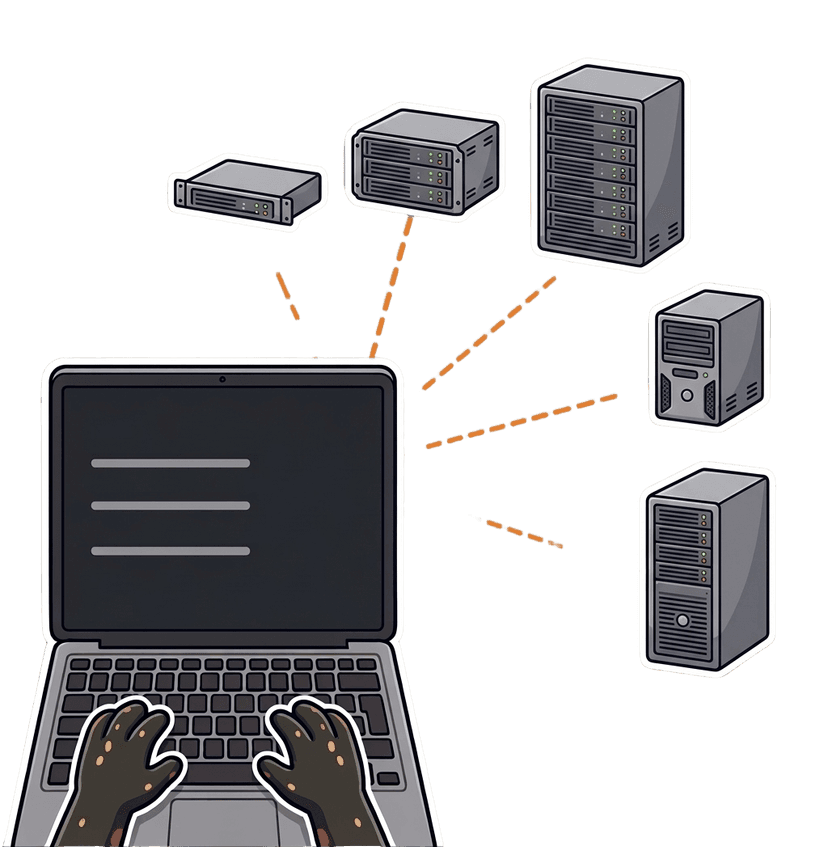
Salamander typing on a laptop connected to five servers

One laptop. Many agents. Many machines.

Your laptop becomes a control plane. Each agent gets its own isolated machine. Different repos, different branches, different tasks. They run in parallel without conflicts. No shared state, no port clashes, no resource fights.

terminal
$ gibil branch feat/api feat/web fix/auth
✓ 3 machines forged in parallel
$ gibil destroy --all
✓ All fires out.
Salamander walking away from an exploding server, unbothered

Break everything. Forge a new one.

Your agent can install weird packages, corrupt the database, rm -rf the whole thing. Who cares? The machine is disposable. Forge a new one in under 90 seconds. Real isolation means real freedom to experiment.

terminal
$ gibil destroy broken-env
$ gibil create --name fresh-env
✓ Fresh machine. Clean slate.

Forge. Use. Burn.

Three commands. That's the entire lifecycle.

1

Forge

$ gibil create --name my-app
  --repo github.com/you/project
  --ttl 30m

A fresh server is forged in seconds. Your repo is cloned, deps installed.

2

Use

$ gibil run my-app "pnpm test"
gibil ssh my-app

SSH in, run commands, let your agent work. Full root access, Docker ready.

3

Burn

$ gibil destroy my-app

When the work is done, the fire goes out. No trace left. No cleanup needed.

Different shape, different work

There are different ways to give an agent or a workflow somewhere to run code. Most are short-lived sandboxes built for sub-second snippets. Gibil is a full Linux machine — slower to start (30–90 seconds), but it can run for minutes to days, at the size you need, on the cloud you choose. Right call when you need a real server. Wrong call for one-shot, sub-second code execution.

FeatureGibilE2BDaytonaFly Sprites
ShapeFull VM (own kernel)Firecracker microVMContainer sandboxFirecracker microVM
Docker-in-Docker
Standard SSH
Own public IP
Resource ceiling48 vCPU / 192 GB8 vCPU / 8 GBConfigurable8 vCPU / 16 GB
Lifetime15m to 30d (extendable)1h Hobby / 24h ProIndefinitePersistent + sleep
MCP server
Bring your own Hetzner
Price/hr (2 vCPU / 4 GB)~$0.008~$0.17~$0.17~$0.30
Cold start30–90s<200ms cold / <30ms snapshot<90ms<1s

The shape decides the work. Gibil is the right call when the box needs to live for minutes to days and run a real Linux stack — Docker, services, build tools, full apt. The microVM and container sandboxes are the right call for sub-second one-shot code execution. Different shapes for different work.

Pricing

The fire burns as long as you need it.

Alpha

Free

Gibil is free while we're in alpha. No credit card required.

  • Full VM access — root, Docker, SSH
  • All CLI + MCP features
  • Bring your own Hetzner or Vultr token
  • No limits during alpha

Frequently asked questions